Cenote and Cave Scuba Diving from Cancun
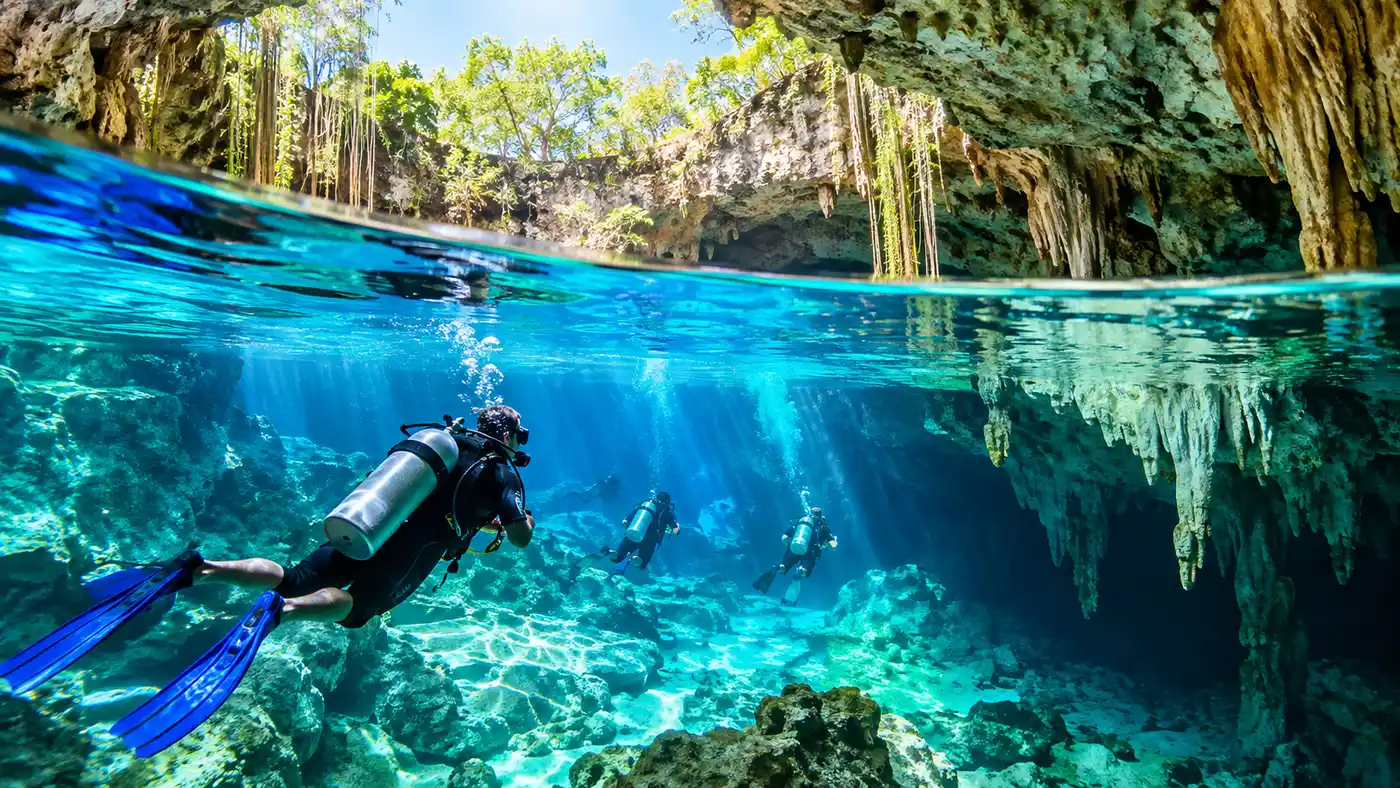
The ocean has colors you expect, but floating twenty feet down inside a jungle limestone sinkhole feels more like drifting across an abandoned moon base. If you booked your vacation to sit on a beach lounger with a cold drink, that is fine, but skipping out on the cenote scuba diving cancun operators run every morning is a genuine mistake. The Yucatán peninsula sits on top of a porous limestone platform honeycombed with thousands of flooded sinkholes, freshwater passages, and ancient collapsed riverbeds that dry land hid for millennia.
You do not actually dive cavern systems right in the hotel zone. You get picked up early in a van, rattle down Highway 307 past Puerto Morelos and Playa del Carmen, and turn off into dense jungle tracks where the air smells like wild damp leaves. Whether you want sunlight splitting through cobalt water like laser beams or you want to drop through a ghostly sulfuric cloud that looks like a midnight forest floor, diving these inland waters is completely distinct from ocean diving. It ruins normal visibility for you forever.
Book your cancun scuba diving experience:
Cavern vs Cave: Understanding What You Are Actually Diving
A lot of divers get nervous when they hear the word cave. There is an essential safety difference between cavern diving and cave diving, and unless you carry double steel tanks on your back and full technical credentials, you will be doing a cavern dive.
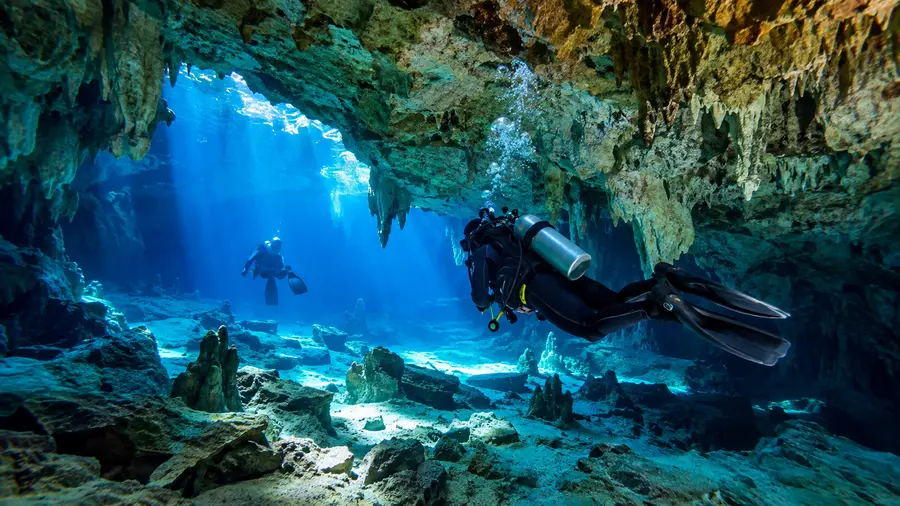
In a cavern dive, you stay within the daylight zone of the entrance opening. If your primary torch fails, natural light from the entrance remains visible, even if it is just an ambient blue glow against distant limestone. Cavern regulations across Quintana Roo limit groups to a strict four-to-one ratio: four divers per certified cavern guide. You follow a permanent guideline laid down in the rock, you stay in single file, and you turn the dive based on the rule of thirds. You use one third of your gas going in, save one third for coming out, and keep one third as an untouched safety reserve.
Note: True cave diving requires hundreds of logged dives, twin manifolds or sidemount rigs, redundant regulators, and extensive reel training. If you hold an Open Water card, your guide keeps you strictly in the cavern zone where daylight is always reachable.
Real cave scuba diving cancun technical shops arrange involves disappearing thousands of feet into pitch-black conduits with zero surface access. That takes years of practice. For recreationally certified divers, cavern tours deliver almost all the visual drama without the psychological dread of getting lost behind a silt-out three turns from safety.
The Best Cenotes to Dive on a Cancun Day Trip
Most dive centers run daily transport down into the Riviera Maya corridor. The sites vary wildly in depth, light, and required skill, so choosing the right one depends on your comfort in overhead environments.
Dos Ojos is the standard for good reason. Located north of Tulum, roughly 105 minutes south of Cancun, it offers two distinct cavern lines: the Barbie Line and the Bat Cave. The Barbie Line stays shallow, rarely passing 28 feet, and it is flooded with sunlight piercing through ceiling fissures into water so transparent you feel suspended in midair. The Bat Cave route is darker, narrower, and surfaces inside an air dome where fruit bats roost in jagged ceiling pockets above your head.
El Pit sits down the same dirt road as Dos Ojos, but it feels like another planet. You step off a wooden platform into an oval opening in the forest floor and drop down into a vertical cylinder. Around 90 feet down, you hit an eerie hydrogen sulfide cloud caused by rotting vegetation that fell into the sinkhole centuries ago. Stripped tree branches poke through the fog like a swamp in winter. Just above that sulfur layer, freshwater meets saltwater in a shimmering halocline that blurs your mask until you kick up through it. Because of the 100-foot depth profile, El Pit demands an Advanced Open Water certification. If your certification card still says Open Water, look into completing an advanced PADI or SSI scuba diving certification so you can tackle deep sinkholes safely.
Chac Mool is another favorite, especially if you have never tried cenotes scuba diving cancun excursions before. Located south of Puerto Aventuras, it features broad openings, simple entries, and massive stalactites. The light shows around 11:00 AM in the Little Brother section are phenomenal when overhead sunlight strikes the opening at a sharp vertical angle.
| Cenote | Max Cavern Depth | Drive from Cancun | Minimum Cert Level | Standout Feature |
|---|---|---|---|---|
| Dos Ojos | 28 ft (8.5 m) | 1 hr 45 min | Open Water | Huge cavern rooms, intense natural light |
| El Pit | 100 ft (30 m) | 1 hr 50 min | Advanced Open Water | Deep vertical drop, sulfur cloud, halocline |
| Chac Mool | 40 ft (12 m) | 1 hr 20 min | Open Water | Dramatic light beams, massive fossil rooms |
| Angelita | 195 ft (dive to 100 ft) | 2 hr 10 min | Advanced Open Water | Thick sulfur cloud with an underwater island |
| Tajma Ha | 45 ft (14 m) | 1 hr 25 min | Open Water | Laser-sharp light beams, fossilized shells |
Angelita is bizarre. It has no cavern passages or decorated side chambers. It is just an open vertical cylinder dropping nearly 200 feet straight into the earth. At 100 feet, you drop through a ten-foot-thick layer of sulfur that smells faintly like rotten eggs through your regulator. Beneath the cloud, natural light cannot penetrate. You sink into total darkness while your flashlight reveals bare branches of a collapsed tree mound sitting on the bottom.
What a Cenote Scuba Diving Day Actually Looks Like
Plan for an early morning. Operators usually pull up to hotel lobbies between 7:00 AM and 7:30 AM. You spend roughly an hour rolling south on Highway 307, usually stopping at an Oxxo convenience store for coffee, water, and sweet rolls.
Once you turn off the pavement onto unpaved jungle tracks, the van rattles along limestone ruts for ten or twenty minutes. You park in dirt clearings under the canopy. Cenote facilities differ depending on who runs the land. Dos Ojos has modern tile bathrooms, rental lockers, and wooden gear tables. Smaller sites like Zapote or Carwash have rustic wooden benches, simple outhouses, and iron hooks screwed into tree trunks to hang your wetsuit.
You gear up on picnic tables, analyze your tanks, and carry your gear down to the water. Some entries have wide wooden platforms with sturdy stairs. Other spots require walking your kit down thirty slippery limestone steps cut directly into the cavern wall. It makes you sweat, which feels great right before dropping into water that never warms above 76 degrees.
- Detailed briefing: Your guide sketches the cavern profile on a slate, showing the daylight zone, line markers, turn pressures, and hand signals.
- Weighting check: You spend the first two minutes at the surface dropping lead, because freshwater lacks the buoyancy you get in the ocean.
- First cavern run: A slow 45-minute dive along the permanent line, swimming single file with six feet between divers to prevent silt damage.
- Surface interval: Packed sandwiches or fresh street tacos, warm thermos coffee, and forty minutes in the sun to warm your bones back up.
- Second cavern run: A completely different line or a short truck transfer to an adjacent sinkhole before loading wet gear back in the van.
Book your cancun scuba diving experience:
Freshwater Buoyancy, Trim, and Silt Management
Freshwater catches ocean divers by surprise. Because fresh water is less dense than sea water, you need roughly 4 to 6 fewer pounds of lead on your belt. If you strap on your usual Caribbean weight, you will sink like a dropped wrench and scrape against limestone decorations that took forty thousand years to form.
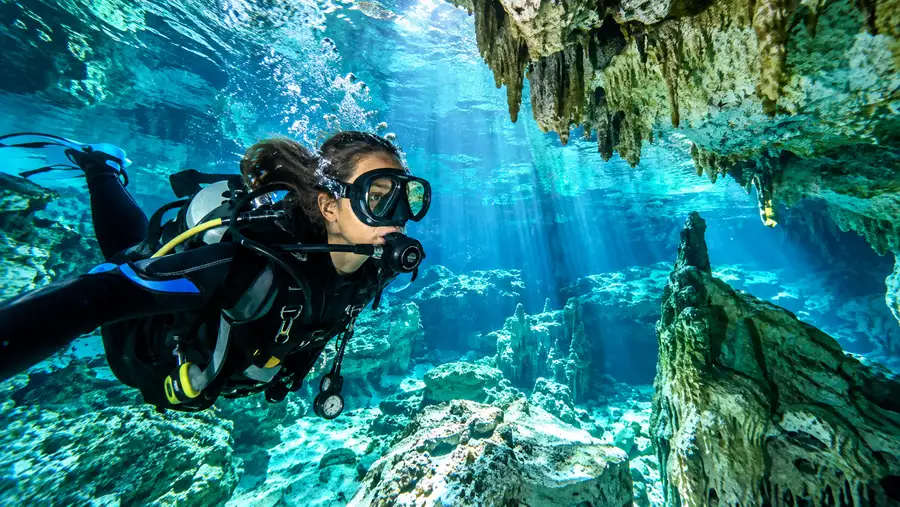
Buoyancy must be completely flat. We call it horizontal trim. Your chest, hips, and knees should stay on one level plane, with your knees bent at 90 degrees and your fins held high above your torso. If your feet drop toward the floor, your fin kicks will stir up bottom sediments. Cenote floors are often covered in fine organic silt or decomposed limestone dust. One bad kick can turn gin-clear 200-foot visibility into gray milk in five seconds flat.
Pro tip: Practice your frog kick before arriving. Pushing water laterally and backward rather than kicking downward protects the floor sediment and keeps your cavern guide from giving you a stern lecture during the surface interval.
Thermal comfort is another issue divers underestimate. The ocean off Cancun hovers around 82 to 84 degrees, but the cenotes sit at 75 to 77 degrees Fahrenheit year-round. It sounds warm on paper until you spend 50 minutes moving slowly through shaded caverns without sun on your back. A 5mm full wetsuit is standard. If you tend to get cold easily, ask your dive shop for a 3mm hooded vest to wear underneath.
Logistics, Camera Fees, and Costs from Cancun
Taking a day trip down to dive cenotes costs more than hopping on a boat outside your resort. You are paying for highway transit, highway tolls, park entrance permits, and private cavern guides. Expect a two-tank cenote trip from Cancun to cost between $180 and $260, depending on the specific cenote and whether entrance fees are bundled into the booking. If you are balancing this with reef diving, check our overview of Cancun scuba diving prices and packages to budget your trip properly.
Landowner fees are a unique quirk of the Yucatán. Local Mayan ejidos or private families own the jungle parcels surrounding these sinkholes. Some cenotes, including Dos Ojos and El Pit, charge separate fees if you bring an underwater camera. They often demand $15 for a basic GoPro or around $50 for a camera rig with external video lights. Keep small Mexican peso bills in your pocket so you are not caught off guard at the entrance gate.
- Check guide credentials: Make sure your dive leader is certified as a Full Cave Diver or Cavern Guide, not just an ordinary open water divemaster.
- Demand small ratios: Local safety laws strictly limit cavern groups to four divers per guide; do not accept an operator putting five or six people on one leader.
- Ask about park fees: Confirm whether the quote includes the cenote admission tickets, which range from $20 to $35 per diver at the gate.
- Verify light gear: Cavern dives require each diver to carry a working primary torch with at least 800 lumens of output.
Frequently Asked Questions about cenote scuba diving cancun
Can beginners dive cenotes from Cancun?
Yes. If you have an Open Water certification and comfortable buoyancy, sites like Dos Ojos and Chac Mool are wide, shallow, and easy to navigate. First-time divers should avoid deep sinkholes like El Pit or Angelita until they have more logged ocean dives.
How cold is the water in the cenotes?
Water temperatures in the sinkholes stay at roughly 75 to 77 degrees Fahrenheit all year. It is noticeably cooler than the ocean, so a 5mm wetsuit is strongly recommended over a thin shorty suit.
Do I need cave certification to dive cenotes?
No. Recreational divers can dive the cavern zone of cenotes under the supervision of a certified cavern guide. You stay within reach of natural daylight and follow a pre-laid guideline through wide rooms.
Are there dangerous animals in the cenotes?
You will see tiny freshwater fish, harmless freshwater turtles, occasional blind cave shrimp, and small bats sleeping in surface air pockets. You will not run into sharks, barracuda, or venomous marine life in these freshwater systems.
Quick Reference
- Water temperature: Constant 76°F (24°C)
- Transit time: 75 to 110 minutes south of Cancun
- Weight reduction: Drop 4 to 6 pounds from your ocean kit
- Guide limits: Maximum 4 divers per guide
Book your cancun scuba diving experience:
The Bottom Line
Floating through a sunbeam in Dos Ojos or hanging above the milky cloud in El Pit is an experience the Caribbean ocean simply cannot match. It tests your buoyancy control, demands your respect, and shows you an ancient geological world hidden directly beneath the jungle floor. Pack a dry sweatshirt for the van ride home, tip your driver, and give yourself a full day away from the resort pool to experience it.
Read more about cancun scuba diving.