Beginner Scuba Diving in Cancun: Non-Certified and DSD Guide
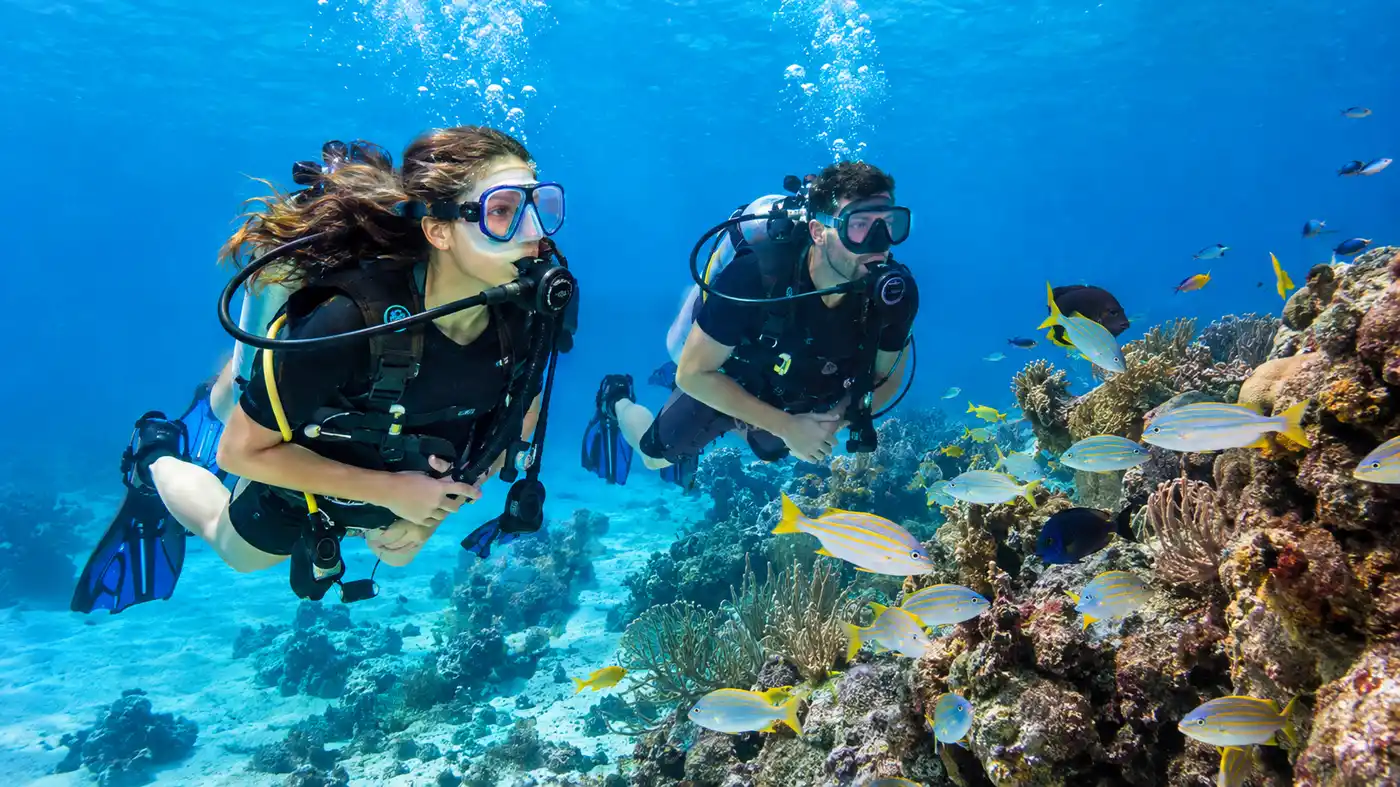
I still remember the sudden panic right before my first breath underwater. You drop below the chop, your brain screams that humans cannot inhale down here, and then you take a tentative sip of dry regulator air. It works. The water around Cancun hovers near 82 degrees most months, clear enough to see sand ripples twenty paces ahead, which makes scuba diving in cancun for beginners about as gentle an introduction to the ocean as you will find on this planet.
You do not need to spend four full days of your vacation studying dive tables or taking written exams to see the reef. The dive industry figured this out decades ago. If you want to dive without a multi-day certification, programs like PADI Discover Scuba Diving - often called a resort course or DSD - get you offshore on your very first morning. Here is everything you need to know about how the process works, where the boats take you, what it costs, and how to avoid the common rookie mistakes that ruin a dive.
Book your cancun scuba diving experience:
How Scuba Diving Cancun Without Certification Actually Works
People often ask if non certified scuba diving in cancun is legal, safe, or just a tourist gimmick. It is an official, globally standardized program run through agencies like PADI and SSI. You do not finish the day with an independent certification card. Instead, you dive under the direct, arm-length supervision of an instructor who monitors your depth, air gauge, and buoyancy while you look at fish.
Your morning begins on land with basic physics and safety mechanics. You learn how water pressure affects your ears, why you must never hold your breath while ascending, and how to use hand signals since you cannot speak with a mouthpiece clamped between your teeth. This chat usually lasts around 35 minutes over a cup of coffee at the dive shop marina.
Note: You must complete a standard medical questionnaire before touching gear. If you check "yes" to heart conditions, recent surgeries, or active asthma, the shop legally cannot take you out without a signed doctor clearance form.
After the briefing, you move into a swimming pool or a shallow, calm bay along the hotel zone. This confined water session is where you practice three specific safety skills. You learn to blow water out of your regulator, flood your mask slightly and clear it with your nose, and recover a dropped mouthpiece. Once you complete those skills and your instructor sees you can breathe without wide-eyed panic, you load onto the boat for open water.
Choosing Your First Dive: Cancun Beginner Scuba Diving Sites
Cancun has an unfair advantage over many Caribbean destinations because the surrounding waters are naturally sheltered by Isla Mujeres. The waves stay manageable, and several major reefs sit in shallow water between 25 and 35 feet deep. For anyone trying first time scuba diving cancun trips, depth is your enemy because deeper water burns through your air supply faster and limits your bottom time.
Most operators take first-timers to one of two places: the famous underwater museum or Manchones Reef. The Cancun underwater museum scuba diving site, specifically the Salon Manchones gallery, features over 450 life-sized concrete statues submerged on a flat sand bed at 28 feet. Statues of local fishermen, urban desks, and old Volkswagen Beetles have grown thick crusts of brain coral and sea fans. Because the statues rest on white sand, ambient sunlight bounces everywhere, making colors pop without expensive dive lights.
Pro tip: Ask your shop if their morning boat heads to Manchones or Punta Nizuc; Nizuc is only suitable for snorkeling due to boat traffic rules, so non-certified divers should insist on Manchones or the MUSA gallery.
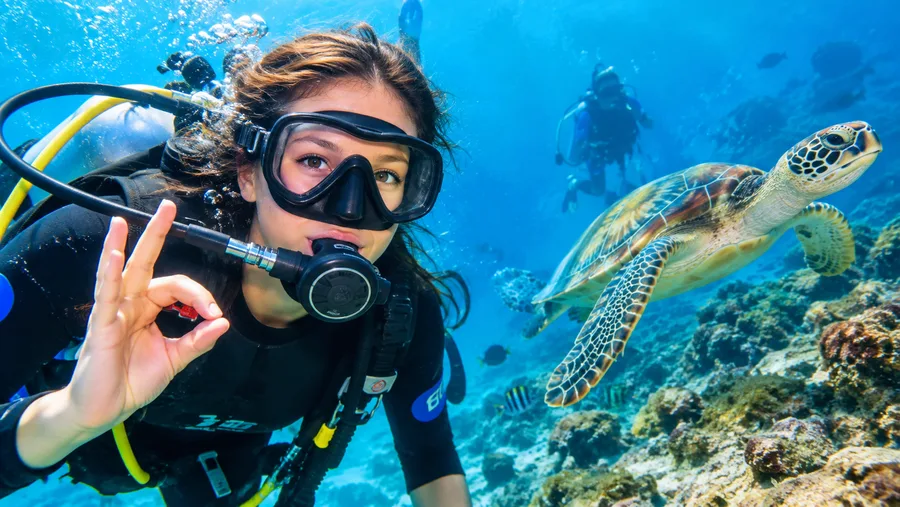
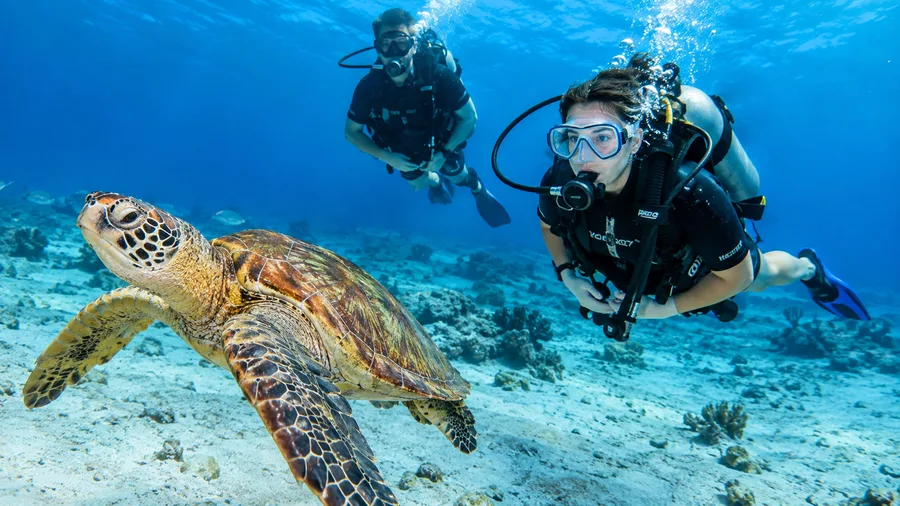
Manchones Reef sits right next to the museum statues. It forms a long bank of elkhorn and staghorn corals where green sea turtles often sleep under limestone ledges. You drift slowly alongside your divemaster at around 30 feet, watching yellow stingrays bury themselves in the sand and schools of french grunts part around you like curtains. It is calm, colorful, and deep enough to feel like real diving without any disorienting blue drop-offs.
What to Expect from a PADI Discover Scuba Diving Cancun Trip
A typical resort course eats up roughly five hours of your day, usually starting at 8:30 in the morning and wrapping up by early afternoon. It helps to understand the exact cadence of the day so you do not feel rushed or anxious when things start moving quickly on the boat.
- Gear fitting at the dock: the crew equips you with a mask, open-heel fins, a neoprene wetsuit (usually 3mm shorty), and a buoyancy compensator vest fitted with a single aluminum 80-cubic-foot tank.
- Confined water drill: thirty to forty minutes in shallow water proving you can clear a mask and breathe smoothly before boarding the boat.
- Open water boat transit: a fifteen to twenty-five minute boat ride across the bay toward the marine park between Cancun and Isla Mujeres.
- The descent line: you roll back into the water and pull yourself down a weighted mooring line step by step, equalizing your ears every few inches until reaching the sand.
- Guided tour: roughly 40 minutes exploring the reef with your instructor swimming just above or beside you, often holding your tank valve if you struggle with balance.
Some people expect tandem scuba diving in cancun riveria maya where you are physically strapped to an instructor like a skydiving jump. That is not how diving works. You wear your own kit and swim under your own power. Your instructor simply hovers within arm's reach the entire time, occasionally adding a burst of air to your jacket or grabbing your fin if you accidentally kick the delicate coral heads.
Book your cancun scuba diving experience:
Cancun Diving for Beginners: Comparing Your Options
Before booking, decide whether you want a quick vacation splash or the beginning of a lifelong hobby. Scuba diving classes for beginners in cancun split into several clear paths, from the simple single-afternoon try-dive to comprehensive open water training. Check current pricing trends in our guide to Cancun scuba diving prices and packages if you are balancing vacation budgets.
| Diving Program | Duration | Max Depth | Certification Level | Average Cost (USD) |
|---|---|---|---|---|
| Discover Scuba Diving (DSD) | Half day (4-5 hrs) | 40 feet (12m) | None (experience only) | $115 - $155 |
| DSD with 2 Ocean Dives | Half day (5-6 hrs) | 40 feet (12m) | None (experience only) | $140 - $185 |
| PADI Scuba Diver (Partial) | 2 days | 40 feet (12m) | Limited lifetime card | $280 - $340 |
| Full Open Water Diver | 3 to 4 days | 60 feet (18m) | Autonomous international card | $420 - $520 |
If you enjoy your DSD afternoon, you do not lose that effort. Most reputable shops let you credit that day's pool session and ocean dive toward a full PADI Open Water license if you decide to upgrade during your vacation. You just pay the difference and continue with the bookwork and second day of boat dives.
Essential Advice for Non Certified Scuba Diving in Cancun
Beginner divers burn through tank air far quicker than veterans. When you feel nervous, you take rapid, shallow breaths, which empties an 80-cubic-foot aluminum tank in barely 25 minutes. The secret is treating your lungs like a slow bellows. Take long, lazy inhalations and gently push the air all the way out. You will stay warmer, swim smoother, and get ten extra minutes looking at coral instead of staring at the dive boat ladder.
- Equalize before it hurts: pinch your nose and blow gently every foot or two on the descent line; never wait until your ears feel pinched or painful.
- Keep your hands crossed or tucked: swimming with your hands flailing like an anxious swimmer wastes energy and threatens to snap fragile sea fans.
- Trust your bubbles: when you lose track of which direction the surface is, look at the exhaust bubbles from your regulator; they always float straight up.
- Do not touch anything: fire coral burns, scorpionfish camouflage on rocks, and human skin oils strip the protective mucus off reef surfaces.
- Mind your flight window: you cannot fly in an airplane for at least 12 hours after a single beginner dive, or 18 hours after two dives.
I see many first-timers worry about sharks. You will likely see nurse sharks resting on the bottom around Manchones, but they are harmless bottom-feeders that look like big whiskered catfish. The real danger on a beginner trip is simply getting seasick on the boat ride before your fins even hit the water. Take a dramamine tablet with breakfast if you get car sick, and keep your eyes locked on the Isla Mujeres shoreline while the crew sets up your gear.
Frequently Asked Questions about scuba diving in cancun for beginners
Do I need to be a great swimmer to try scuba diving in Cancun?
You do not need to be an Olympic athlete, but you must be comfortable in water over your head. During a DSD program, you will float and tread water, but an instructor stays right next to you. If you panic when your face gets wet, spend a day snorkeling first to get comfortable.
How deep do beginners dive during non-certified courses?
Standard PADI and SSI rules cap beginner experience dives at a maximum depth of 40 feet (12 meters). Most Cancun beginner dives stay around 28 to 32 feet because that is where the best light and coral growth happen anyway.
Can children try beginner scuba diving in Cancun?
Yes, children as young as 10 years old can participate in the PADI Discover Scuba Diving ocean experience. For kids aged 8 and 9, shops offer a pool-only program called Bubblemaker, which caps depth at six feet inside a safe swimming pool.
What happens if I cannot clear my ears during the descent?
You simply signal your instructor with a thumbs-up (which means go up, not "good"), ascend two or three feet until the pressure releases, and try clearing again gently. You never force an equalization. If an ear refuses to pop due to sinus congestion, your instructor will keep you at a comfortable shallower depth or abort the dive safely.
Quick Reference
- Water temp: 78-83°F year-round
- Typical beginner depth: 25-32 feet
- DSD course duration: 4 to 5 hours
- Wait time before flying: 12-18 hours
- Certification earned: None (experience credit only)
Book your cancun scuba diving experience:
My Take
If you are sitting in your hotel room debating whether to book a beginner scuba dive or just stick to another day of buffet drinks and pool loungers, go book the dive. The Yucatan barrier reef is the second largest system in the world, and looking at it through a snorkel mask from ten feet above does not compare to kneeling on the sand alongside a sea turtle. Cancun's shallow sand channels make it perhaps the easiest, most forgiving classroom on earth. Take a slow breath, clear your ears early, and enjoy the silence down there.
Read more about cancun scuba diving.